
Ready for Life
A practical checklist for raising responsible, generous, empathetic, and independent adults.


As important as academics are in homeschooling, it’s just as essential to prepare your children for adulthood, helping them grow into responsible, independent young men and women who are ready to pursue their purpose and calling. And when you help your children understand how they learn best, and teach them how to find information when they need it, you don’t have to worry about “gaps” in their education. They’ll know how to keep learning long after graduation. Below are simple, practical suggestions for how to build these habits, starting when your children are young and continuing as they grow.
Read aloud often
Reading aloud builds connection, strengthens vocabulary, and models fluent reading. Choose books you both enjoy and include novels, biographies, picture books, even poetry. Make it part of your daily rhythm: a chapter over breakfast, a story before bed, or a shared audiobook in the car. I read aloud to our children the entire time they lived at home. The goal isn’t perfection; it’s creating a culture where stories and ideas are part of everyday life. For little ones, I love recommending Five in a Row. It has you read the same book five days in a row and pulling simple lessons from the story, many you might never notice on your own. It helps you see children’s books in a richer, more holistic way and makes learning feel natural and connected.
Play outside a lot
Unstructured outdoor play helps children develop creativity, resilience, and problem‑solving skills. Encourage them to explore, climb, dig, build, and imagine. You don’t need elaborate equipment. Use what’s around including sticks, rocks, water, and open space. Regular time outside also helps regulate emotions and energy, making learning and family life smoother. When emotions run high and the kids aren’t getting along, hit pause and head outside for a reset. Fresh air and movement can work wonders for everyone. Our kiddos loved to go on ‘wet walks’ after a rain.
Limit screen time
Screens aren’t the enemy, but balance matters. Set clear boundaries around when and how screens are used, and offer appealing alternatives such as crafts, board games, outdoor time, or simple household tasks. Model healthy habits yourself by putting your own devices away during family time. When screens are used, choose content intentionally and talk about what they’re watching or playing. One of my friends was concerned with how much time her children would spend playing video games during the summer break if she didn’t set boundaries, so she set a simple rule: they could play as much as they wanted from 6–8 a.m. And guess who suddenly started waking up at 6 a.m. all summer long? The book The Anxious Generation points to excessive screen time and too little outdoor play as two of the biggest contributors to rising anxiety in children today.

Listen to music often
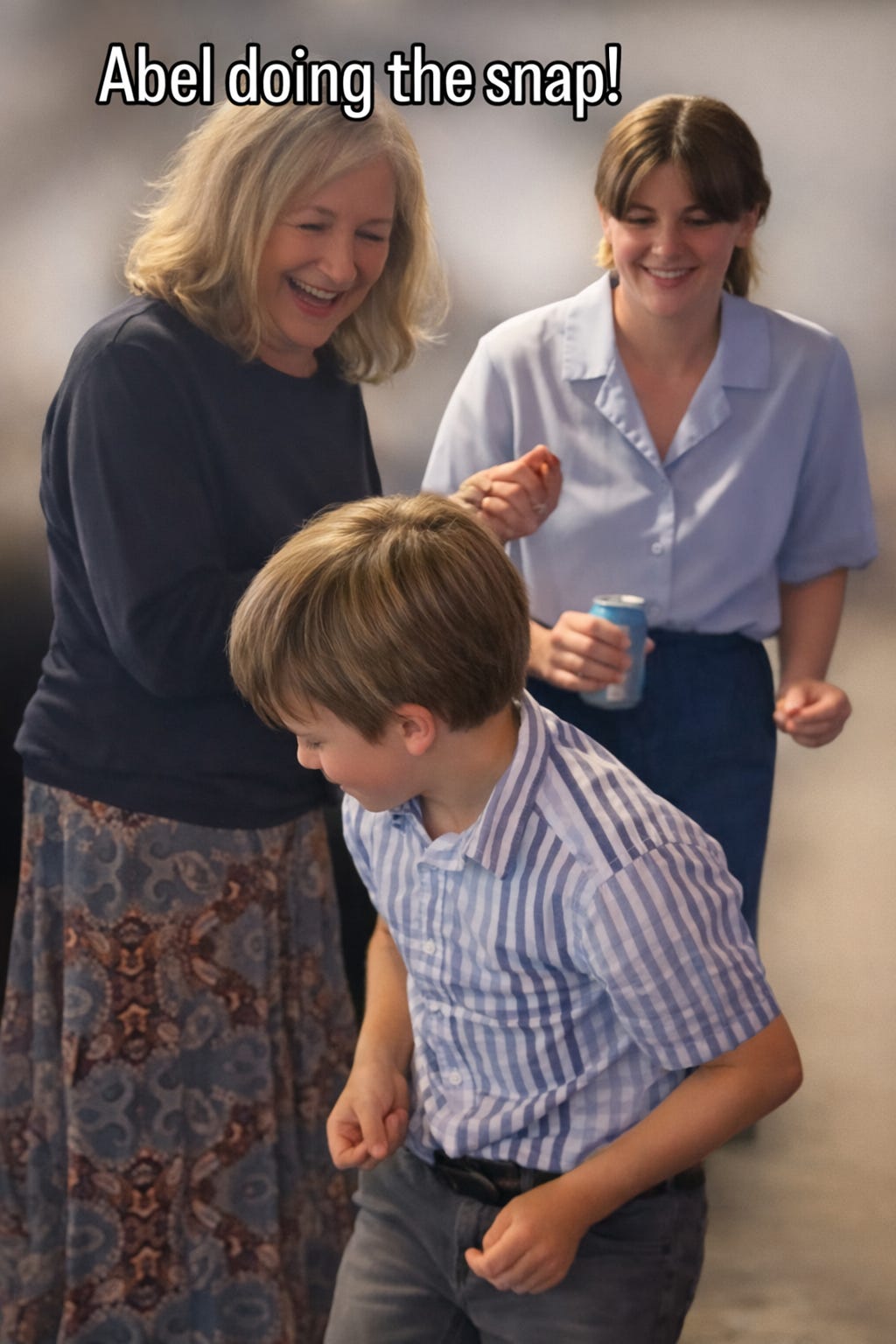
Music enriches the home atmosphere and supports brain development. Play a variety of genres from classical, to jazz, folk, worship, and more and let your children discover what they love. Encourage them to sing, dance, or learn an instrument if they’re interested. Music can also be a calming tool during transitions or a fun way to reset the mood. One of my grandsons, age nine, learned the snap dance from the jail scene in one of the Minion movies (which I’m pretty sure was inspired by West Side Story). He practiced it until he had every move down, and before long he became the star of any gathering with music, happily showing off his newfound skills and delighting everyone around him.
Play games
Games teach strategy, patience, cooperation, math and critical thinking. Mix in board games, card games, word games, and active outdoor games. Let your kids win sometimes, but also let them lose. Games are a low‑pressure way to build resilience, strengthen family bonds, and practice important life skills like taking turns and following rules. The newest game we’ve added to our collection is Flip 7, an affordable and fun game.

Discover the way they learn best
Every child has a unique learning style, some need movement, others need quiet; some learn visually, others through hands‑on experiences. Pay attention to what helps them thrive and adjust your approach accordingly. When children understand how they learn, they become more confident and independent. This awareness also helps eliminate fear of “gaps,” because they know how to find information and teach themselves when needed. Dr. Kathy Koch is a frequent speaker at homeschool conferences and a treasure trove of insight on how children learn, think, and grow. Her talks are packed with practical wisdom that helps parents understand and nurture their kids more effectively. Check her out when you have time.
Encourage their inquisitiveness
Curiosity is the engine of lifelong learning. Welcome questions, even the endless ones, and help your children learn how to find answers from books, videos, experts, experiments, or simple observation. Instead of giving quick answers, try asking, “What do you think?” or “How could we find out?” This builds confidence and critical thinking. Before the internet came along, we taught our kids to find answers using atlases, almanacs, encyclopedias, dictionaries, and more. It was a hands‑on way to learn research skills and curiosity. In fact, I wrote curriculum entitled Information, Please, to help parents teach their students these skills. It sold well prior to the advent of the internet! While encouraging your children to ask questions is important, it’s just as valuable to teach them that it’s okay to question answers, respectfully and thoughtfully of course.
Give them chores, starting young
This is so important and, not only will it benefit your child, you will benefit as well! Chores teach responsibility, competence, and the value of contributing to the family. Start with simple tasks like matching socks, feeding pets, wiping counters, and increase responsibility as they grow. Be patient as they learn, and resist the urge to redo their work. The goal is progress, not perfection. Celebrate effort and consistency. One of my sons has six children, lives on a farm, and his wife homeschools their crew. Recently, when I stopped by for a visit, I noticed a plate of pancakes on the counter and asked if I could have one. “Of course,” my daughter‑in‑law said with a smile and then she added that their four‑year‑old had made them. And let me tell you, they were delicious.
Let them solve problems
It’s tempting to step in quickly, but giving children space to struggle builds resilience and independence. When they face a challenge such as missing an item, sibling conflict, or a tricky assignment, guide them with questions rather than solutions. “What have you tried?” or “What else could you do?” Over time, they learn to think through problems instead of relying on adults to fix everything. One resource I’ve found especially helpful for teaching kids how to resolve conflict is The Young Peacemaker by Corlette Sande. It gives families simple, biblical, and practical tools for working through disagreements in healthy ways.

Help them become articulate speakers
Strong communication skills open doors in every area of life. Encourage your children to express their thoughts clearly, make eye contact, and speak respectfully. Practice through conversation at the dinner table, narrating stories, giving short presentations, or participating in discussions. Model good listening and thoughtful responses yourself. I homeschooled using unit‑study‑style co‑ops, and our children began giving reports at a very young age. I truly believe this early practice is why they grew up comfortable and even confident speaking in front of others. In fact, my oldest won a state-wide speech contest when she was 16, earning a college scholarship. For families who want to take those skills further, there are two excellent Christian speech and debate leagues for homeschoolers: NCFCA and STOAUSA. I highly recommend having your children participate in one of these for at least a year. I didn’t learn about these opportunities until after my four oldest had already graduated, and I wish I had known sooner. If there isn’t a club in your area, you can always start one.
Make sure they have a strong work ethic
A solid work ethic grows from consistency, responsibility, and meaningful expectations. Give your children tasks that matter and hold them accountable for completing them well. When a task isn’t done to the standard you expect, have your child redo it until it’s done well. A friend of mine used a simple but effective method: her children repeated the action ten times when it wasn’t done satisfactorily the first time. If they forgot to hang up their towel after a bath, they hung it up ten times. If they swept, but left dirt behind, they swept the area ten times. It didn’t take long for them to learn that doing the job correctly the first time was much easier than repeating it over and over. Praise effort, perseverance, and integrity, not just results. Help them set goals and follow through. Over time, they learn that hard work leads to confidence, competence, and opportunity.
Ministry and/or community service
Over the years, our children participated in countless activities that nurtured compassion and generosity. Even now, I’m continually blessed by the ways my adult children serve others. One son handed out free blankets during an unusually cold Florida winter this year. Another stocks a local food pantry. One daughter regularly takes her children to visit residents at a senior center, while another helped three women transition out of homelessness. Together, we’ve played with and tutored children living in a mobile home park for previously homeless families. My youngest daughter founded a nonprofit to support the growth of a school she helped start in Uganda. All of my children give financially to those in need. When I considered leaving my full‑time job, but worried about finances, they encouraged me wholeheartedly, assuring me they’d have our backs if we ever needed help. Requiring our children to serve others, even when there was little visible reward, helped shape them into kind, empathetic adults whose hearts remain focused on blessing others.
Just say yes
I encourage parents to support their children’s ideas, even the ones that seem wild, unrealistic, or a little out‑there, as long as those ideas aren’t immoral or illegal. When there’s a cost involved, you can choose how to support them: contribute a portion, offer a loan, or help them brainstorm ways to earn the money themselves. The idea may succeed or it may flop, but the lessons learned along the way are invaluable. One of our sons bought and sold cars, scooters, and trailers long before he was old enough to drive (or even buy spray paint). He would spot a good deal, ask us to help with the purchase, fix it up, and then resell it for a profit. Those early “yeses” helped shape his confidence, creativity, and work ethic.
It doesn’t hurt to ask
Because money was often tight while we were self‑employed and raising nine children, I regularly had to get creative by bartering, negotiating, or simply asking if there were alternative ways to participate in things we couldn’t afford. My kids watched this and learned an important truth: it never hurts to ask.
I recently shared a TikTok about one of my sons who, as a teenager, asked a convenience‑store clerk whether it mattered what size container he used for an Icee refill. When the clerk said it didn’t, my son went out to the truck, grabbed a clean five‑gallon bucket, filled it to the brim, paid for it, and took a handful of straws so he could share it with his youth group. The clerk laughed and said, “That was funny, but you won’t be doing that again.” He didn’t just learn to ask—he learned to ask big.

Discover unique opportunities
I loved giving my children a wide variety of real‑world experiences, everything from paid jobs to volunteer work. They attended conferences, debates, and presentations. They went to camp, and by age twelve they were working there. They participated in TeenPact, visited the capitol to observe the legislative process, and even joined peaceful protests when something unjust was happening. They served on mission trips both in the U.S. and abroad. Several joined the Civil Air Patrol. When relatives or neighbors needed help, they stepped in. They joined teen court, and during legislative sessions (back when we lived in Tallahassee), they were hired to help. They babysat, campaigned, learned yard work and construction from their dad, and helped clean out houses my husband listed, benefiting from any treasures they uncovered. These experiences exposed them to a wide range of work and responsibility. Several even completed internships that helped them sharpen their skills. As homeschoolers, we have so much freedom so take advantage of the opportunities around you. You’ll never regret it.
Non-negotiable parental mandates
Even though homeschooling offers tremendous flexibility, there are times when parents must stand firm on certain activities and expectations. We called these our non‑negotiables. Even when other families chose differently, we held to what we believed was best for ours. Over time, as we gained experience, we established several key non‑negotiables: our high schoolers couldn’t hold steady jobs that limited their flexibility to pursue unique opportunities; they were required to attend Summit Ministries or Worldview Academy at least once (many went multiple times and later served on staff); they participated in TeenPact; and they joined a speech and debate club for at least one year. I didn’t require competition at the time, although if I could do it again, I would. We also encouraged other valuable experiences, though not all were mandatory. Every family’s list will look different, but setting clear non‑negotiables helps ensure your homeschool reflects your values and priorities.
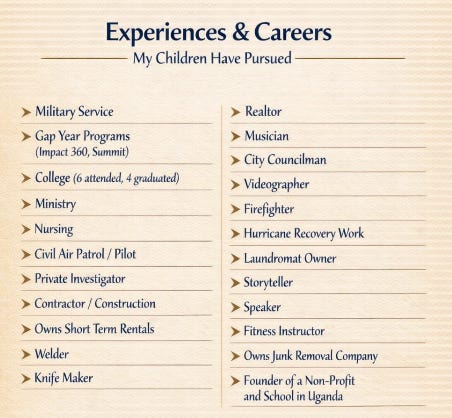
Here’s a look at some of the experiences and career paths my children have pursued.
Summary
When I look back over the years, I’m reminded that raising confident, capable, compassionate young adults isn’t about perfection, it’s about saying yes to curiosity, encouraging big ideas, embracing hands‑on experiences, and giving our children room to grow. Whether it was teaching them to research with atlases and encyclopedias, supporting their wild entrepreneurial ventures, letting them learn from real work and real people, or simply helping them ask good questions, every moment added up. Homeschooling gives us the gift of flexibility and the freedom to shape an education rich in character, creativity, and opportunity. Lean into it. Say yes often. And trust that the seeds you’re planting today will bear fruit for years to come.